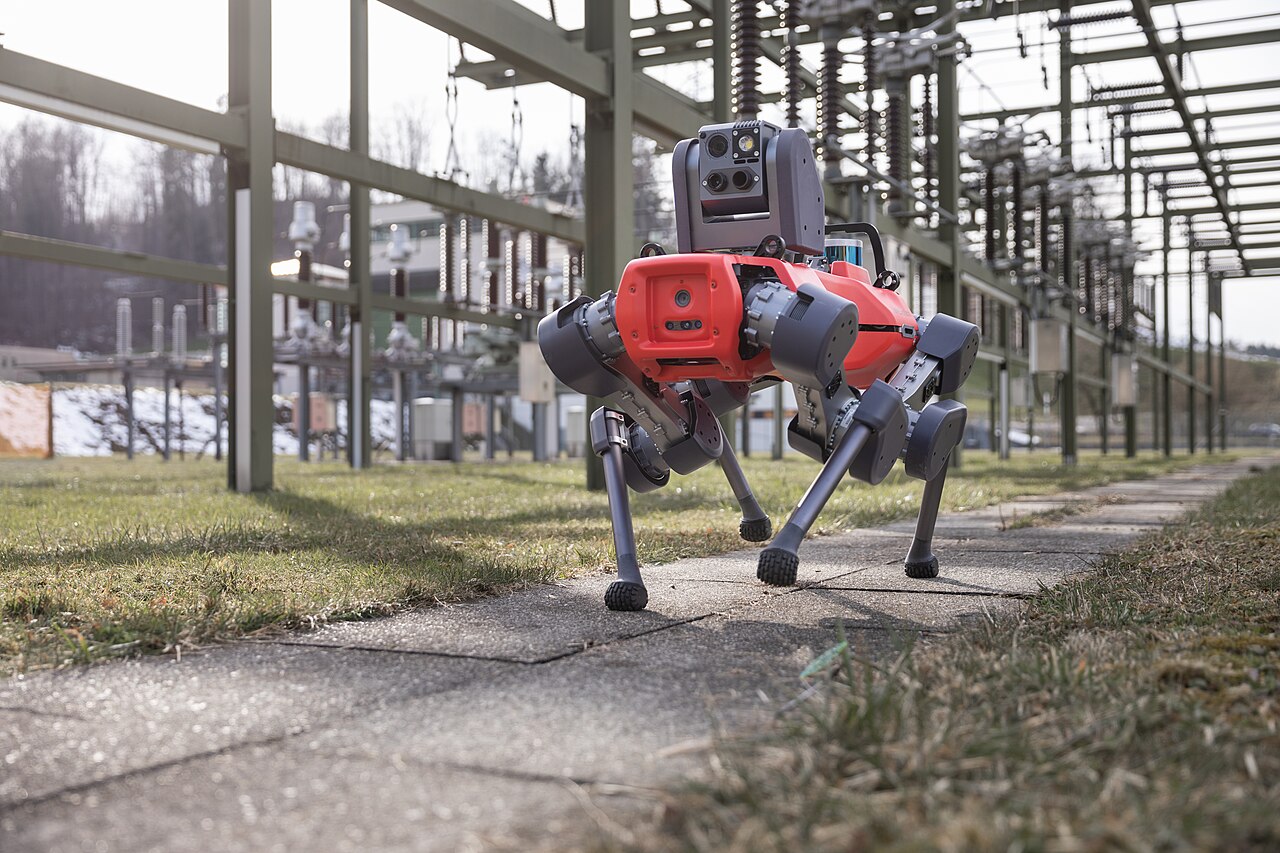
ANYbotics' December 2023 account of railCare described a pilot at Domat/Ems in Switzerland using ANYmal to inspect freight wagons. This is a useful concrete example because it prevents a broad phrase—automated railway inspection—from obscuring what is actually being examined. A robot looking at a wagon's components and an instrumented vehicle measuring track geometry address different assets. Both can contribute to rail reliability, but neither result can be substituted for the other. The distinction remains important as inspection software becomes more integrated. railCare robotic inspection pilot, December 27, 2023.
The train-maintenance work preceded the fleet platform
Earlier, ANYbotics and Stadler Service explored how mobile robots might support train maintenance, including a workshop to identify priority scenarios and the business case for them. That account records exploration and planning, not a claim that robots had replaced depot inspection across Stadler's operations. Read alongside the railCare pilot, it shows a progression from identifying useful tasks to testing a specific application. The October 2026 transition from Data Navigator to Shift adds a later software layer, but a new platform name does not retrospectively turn those earlier pilots into widespread deployments. ANYbotics and Stadler train-maintenance exploration; Data Navigator becomes Shift, October 2026.
The wagon setting makes the attraction of a legged robot understandable. The relevant evidence is distributed around a large object, and some components are inconvenient to view from a standing position. A mobile sensor can acquire a consistent set of views without redesigning the entire depot around fixed cameras. Yet consistency is not the same as completeness. Different wagon types, loading states and obstructions can change what is visible. A successful inspection routine should reveal which expected views were obtained and which could not be captured, rather than treating arrival at the end of a route as a complete inspection.
Fleet records determine whether a finding follows the wagon
A wagon moves between locations and organizations. Its inspection evidence therefore needs a stable identity that survives those movements. A photograph attached only to the robot's mission number is less useful than one linked to the correct wagon and component. The same issue appears when a component is repaired or replaced: the historical condition belongs to the old configuration, while later measurements belong to the new one. If the data model does not preserve that distinction, a trend line can combine incompatible observations and create an apparently precise but misleading maintenance story.
Track-inspection programmes offer a complementary lesson about repeatability. Their value comes from connecting measurements with known locations and comparing them over time. Wagon inspection needs an equivalent discipline around asset identity, viewpoint and component condition. The analogy does not imply that the same sensors or thresholds apply. It shows why robotic inspection becomes an information-management problem as soon as an organization wants to use the result beyond the day it was captured. The robot is the collector; the maintenance record makes the observation durable.
A pilot should answer a bounded question
The railCare account is best read as evidence of a particular pilot and its intended use. It does not establish an error rate across all wagon fleets or prove that human examination is unnecessary. A useful next step would identify the classes of finding the robot can reliably surface, the cases it misses and the additional work required to resolve ambiguous images. That evidence would let a railway decide where the robot adds capacity without assigning it a broader role than demonstrated. Autonomy is valuable here when it standardizes useful observation and lets skilled staff concentrate on interpretation, repair and the cases the machine cannot confidently complete.
Railway inspection offers a clear example of automation's value and its limits. Covering more track can improve visibility, but a measurement still needs interpretation and follow-up. The operational question is whether the information helps the railway locate, understand and address a condition before it becomes more consequential. FRA uses automated inspection data to inform maintenance and manual inspection. FRA Automated Track Inspection Program.
Make measurements comparable
Comparison over time requires consistent location and measurement context. A detected change could represent deterioration, a different operating condition or a difference in the measuring system. A useful record should let reviewers distinguish these possibilities instead of presenting every difference as a new defect.
Automated data should support a traceable assessment rather than erase professional judgment. An analyst needs access to the relevant observation, confidence limits and previous findings. Where the evidence is incomplete, the system should support additional inspection rather than quietly substitute a confident classification for a missing measurement. NIST's robotics programme develops performance measures and evaluation methods. NIST measurement science for robotics.
Preserve the path to action
Prioritization creates the next challenge. A long list of findings must become a manageable work programme with clear urgency and ownership. Otherwise a survey can improve the appearance of visibility while simply transferring the bottleneck to analysts and maintenance planners who lack time to resolve the incoming evidence.
Performance reporting should therefore connect survey activity with confirmed findings and completed follow-up. This approach does not require automation to make every decision. It asks the technology to make the existing decision process more informed, repeatable and accountable, which is a more defensible ambition than replacing the whole inspection function.
Sources & evidence
This archive preserves its original editorial date. Sources describe the events and announcements discussed; they do not establish today’s status.